The database for AI-native software
Databases that build themselves.
Tabula lets AI agents create, populate, and evolve managed Postgres databases through MCP. Describe what you need to store — the agent handles the rest. Your app reads the data like any other backend.
tabula_create
name: "market_research"
description: "Companies, funding rounds, and key people in the climate tech space"
Created "market_research" — 3 tables, 14 columns, 4 indexes
tabula_insert
database: "market_research", table: "companies"
data: { name: "Watershed", sector: "carbon-accounting",
funding: "$100M Series C", source: "crunchbase.com" }Inserted 1 row
tabula_query
database: "market_research", table: "companies"
where: { sector: "carbon-accounting" }[{ name: "Watershed", ... }, { name: "Persefoni", ... }]Visual MCP workbench
Inspect the database work before it changes real data.
Tabula MCP Apps render captured product states for schema inspection, data exploration, review gates, export handoff, fork comparison, SQL results, and destructive drop review. Text-only hosts still receive explicit summaries and confirmation instructions.
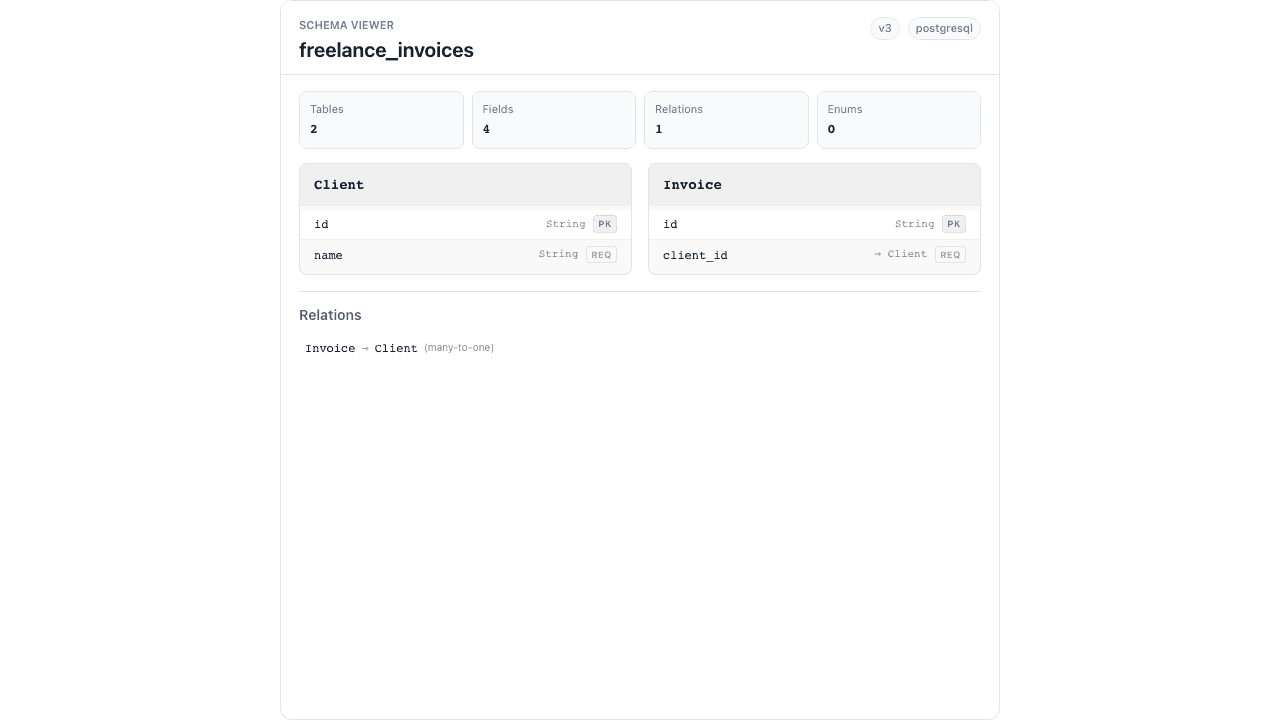
Schema map
Tables, fields, relationships, and enums render as a scanable model.
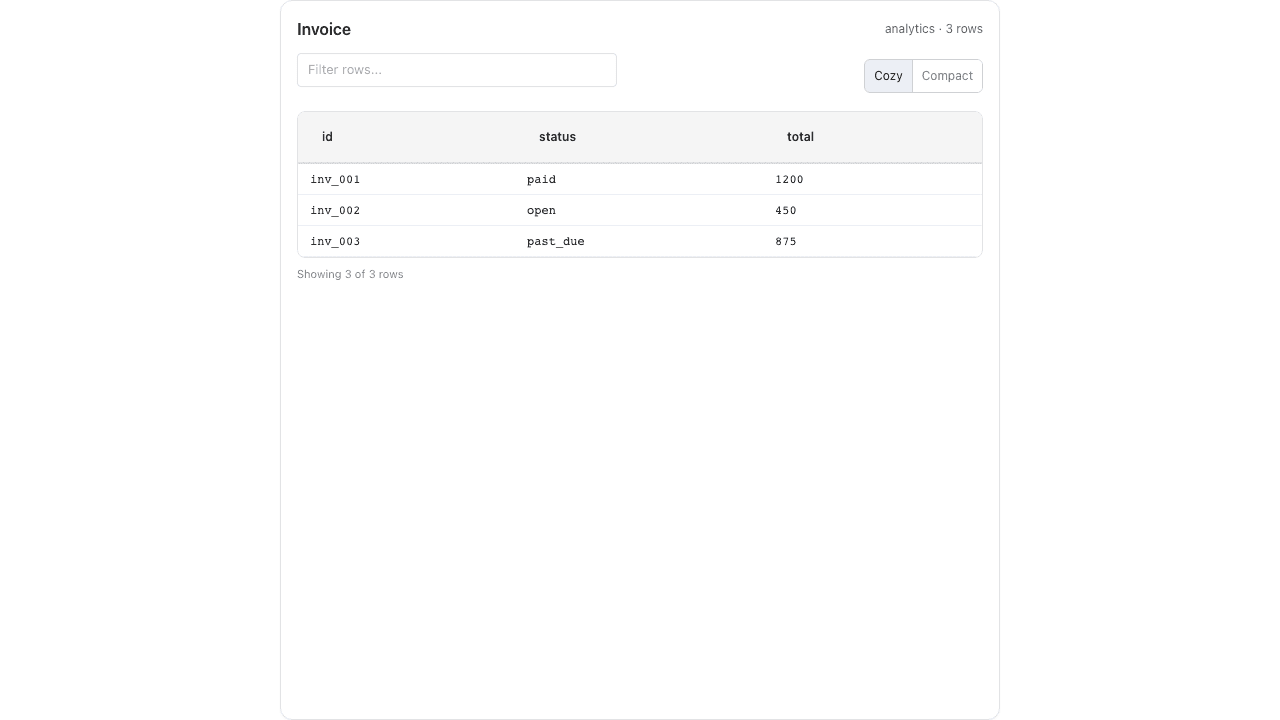
Data grid
Query results stay sortable, filterable, and readable inside the host.
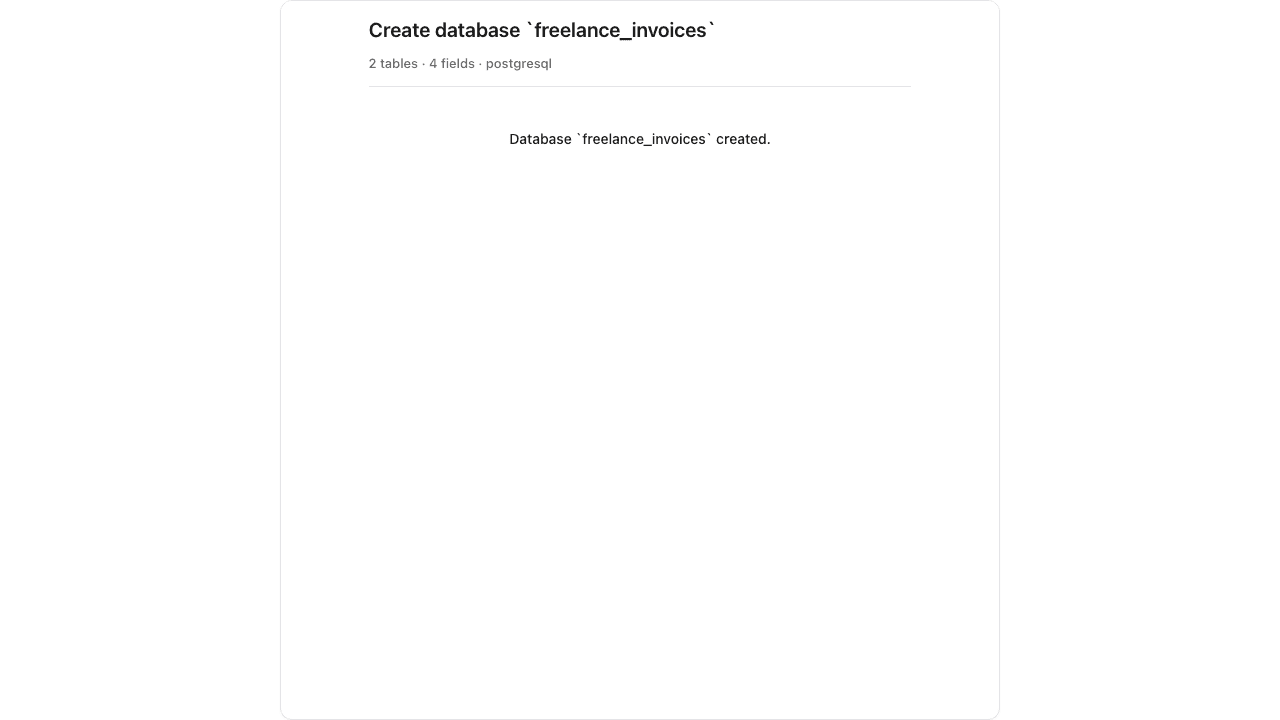
Create review
New databases show the proposed schema before the user applies it.
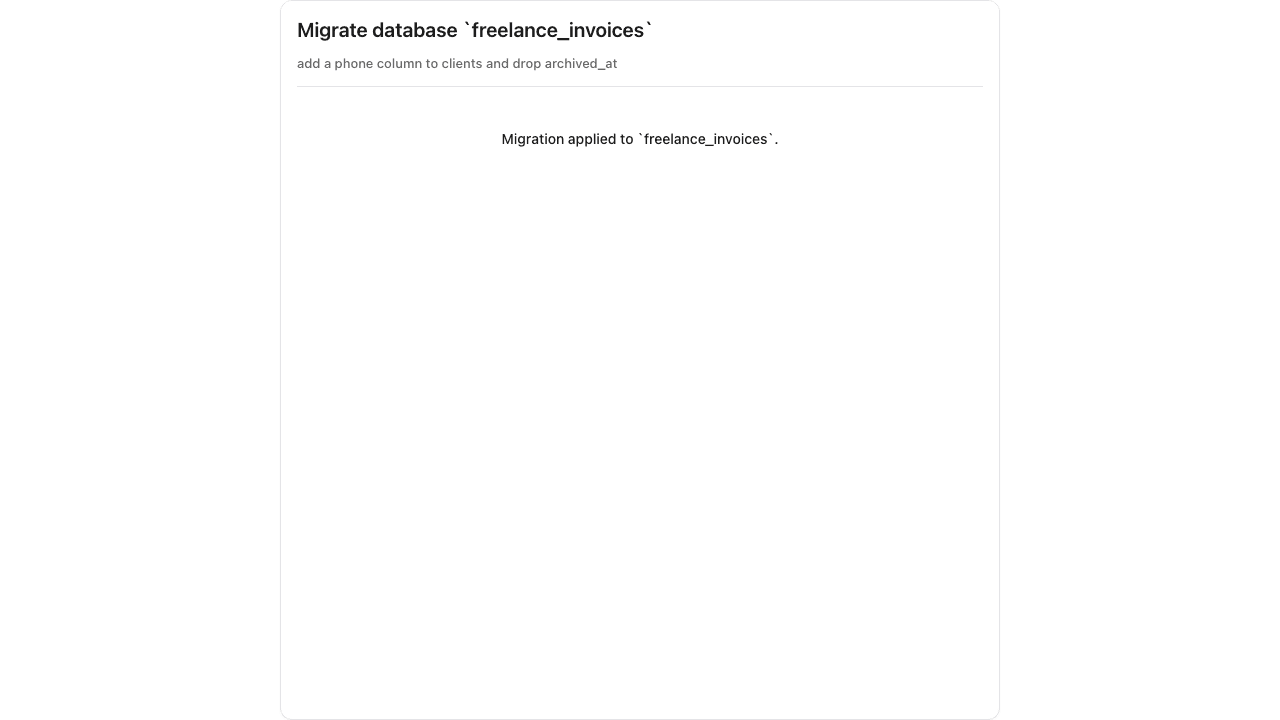
Evolve review
Schema changes show grouped diffs and completion state after approval.
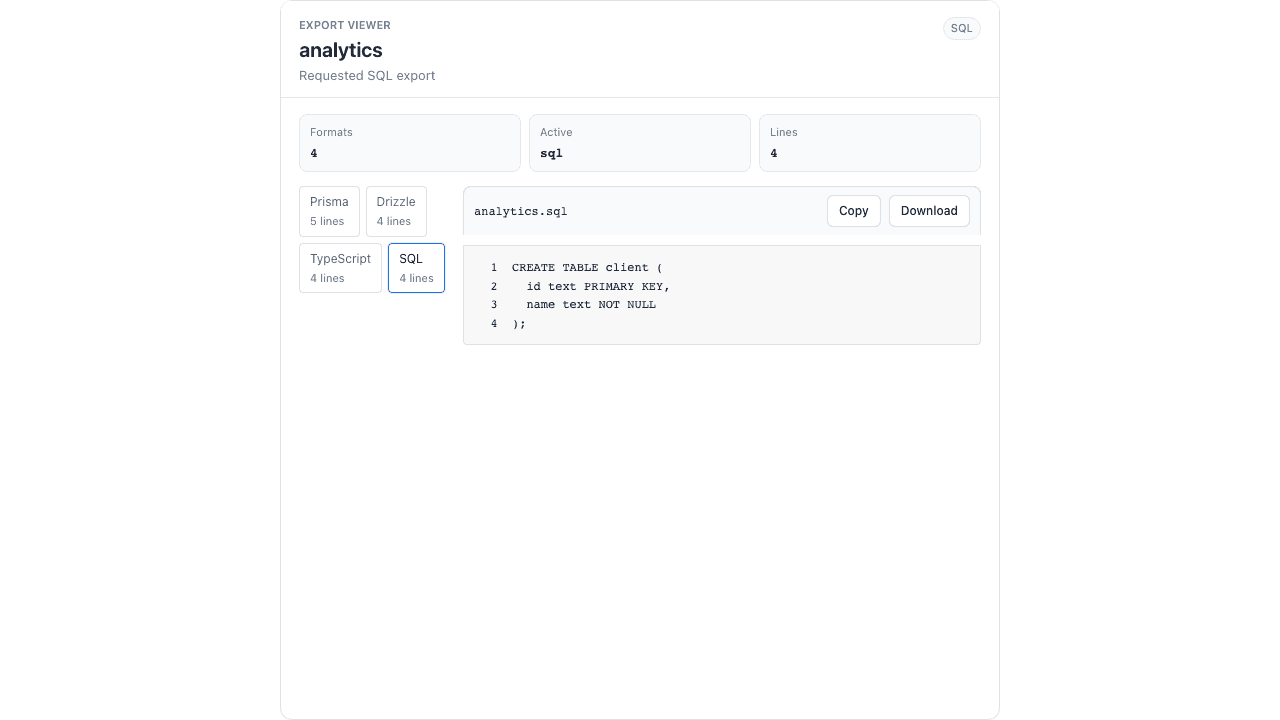
Export handoff
Prisma, Drizzle, TypeScript, and SQL exports are copyable artifacts.
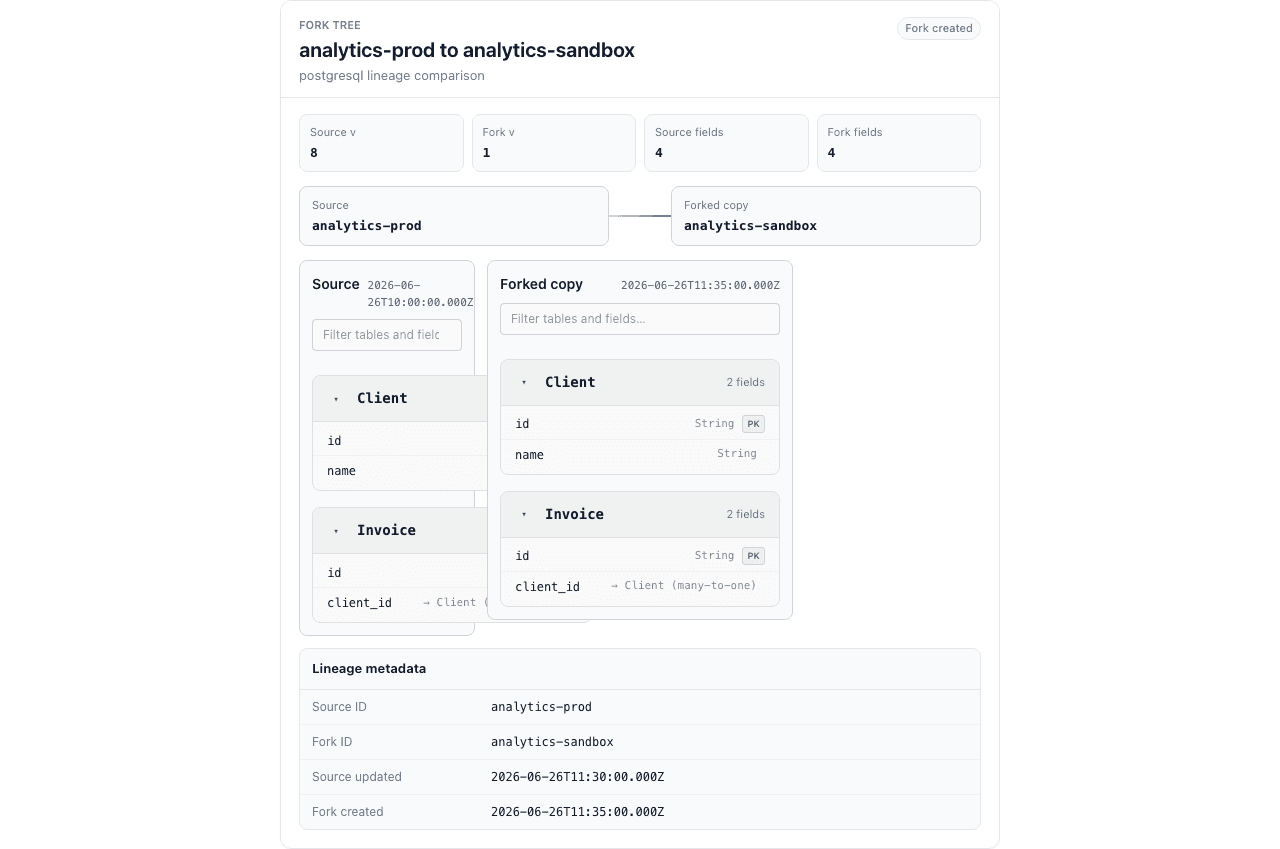
Fork lineage
Source and forked databases stay visible before experiments continue.
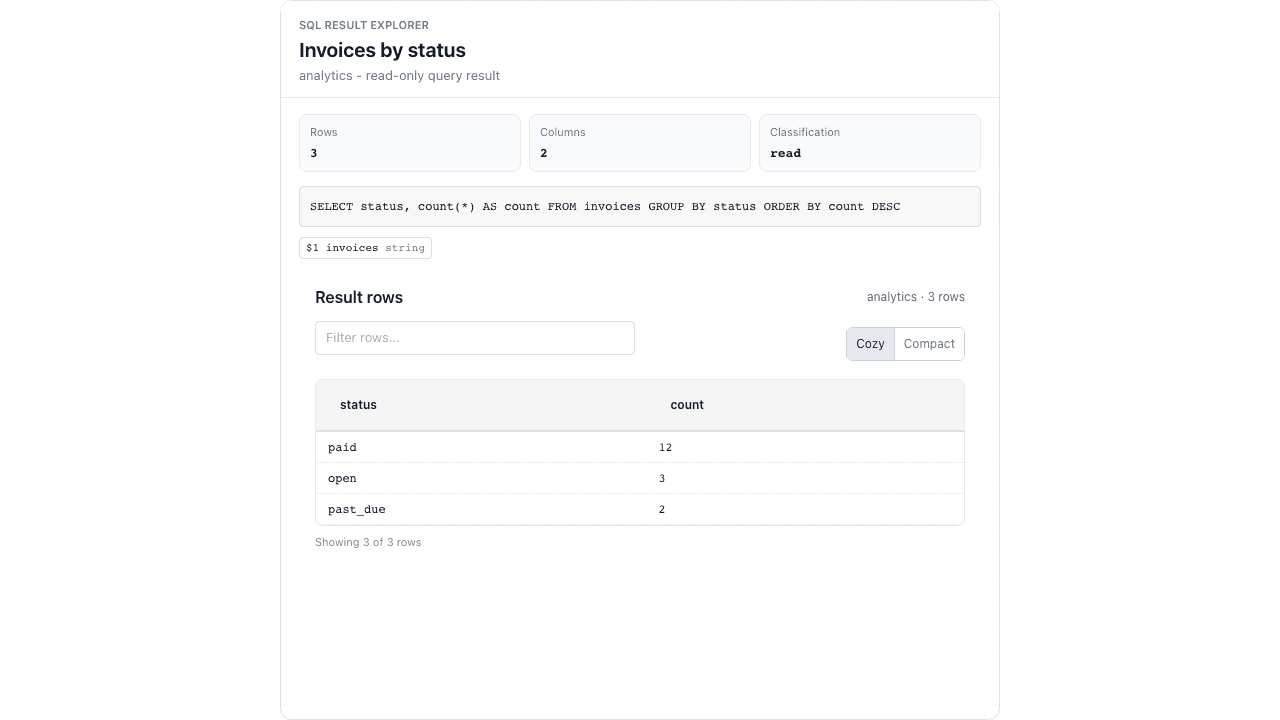
SQL results
SQL output keeps columns, rows, and executed statement context together.
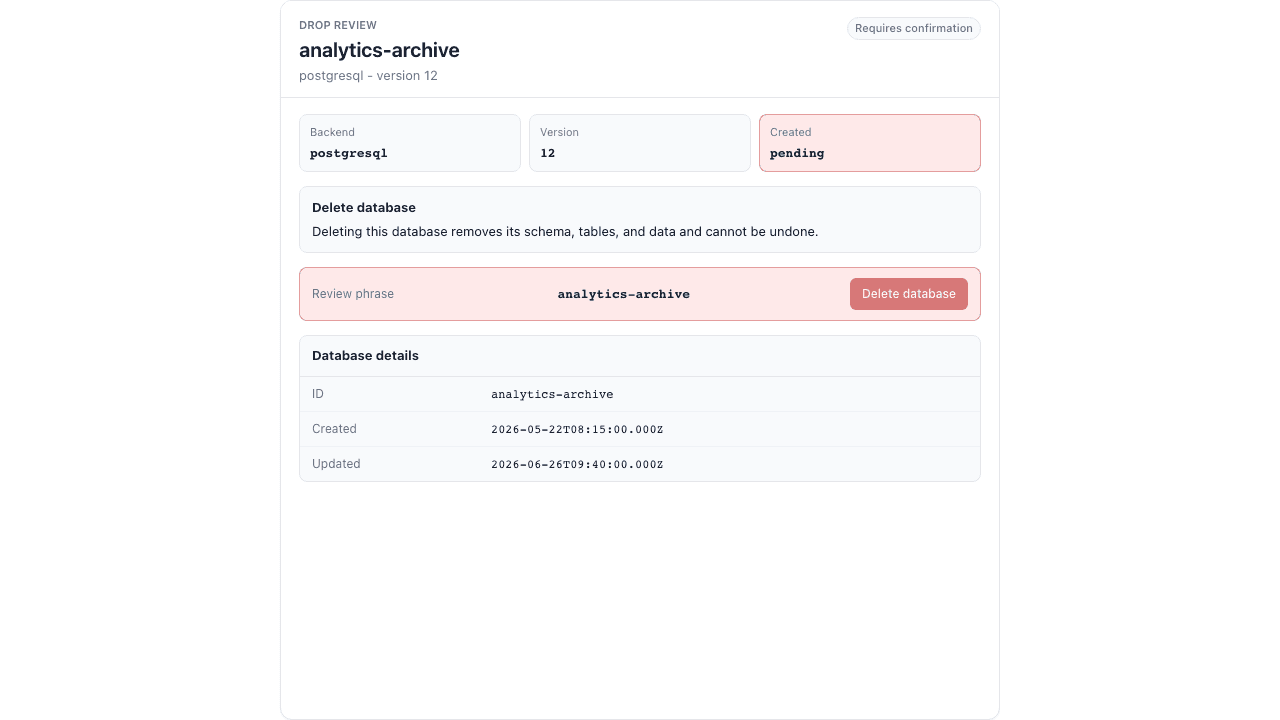
Drop review
Deletion starts with impact review, export handoff, and explicit apply.
The section only shows fixture-backed surfaces. Planned or browser-capture-blocked states stay out of the public gallery until they have repeatable visual evidence.
Agents need more than a context window.
Most agent memory today is either unstructured files, append-only vector stores, or hand-wired database schemas that a developer maintains. None of these work when the agent is the one discovering, organizing, and maintaining the data.
Tabula is the missing layer: a managed database that agents can design from scratch, populate as they work, and evolve as requirements change. Real Postgres underneath. Safe, scoped MCP tools on top. No credentials to manage. No DDL to write. No tables to accidentally drop.
Agents design the schema
Describe what needs to be stored in plain English. Tabula generates production-ready tables, columns, indexes, and relationships. When the data model changes, describe what's different — Tabula handles the migration.
Data that persists and grows
Every row lives in real Postgres. Agents populate data across sessions, re-run pipelines to keep it current, and flag what's gone stale. Your application reads it through the REST API or TypeScript SDK.
Safe by default
Agents get scoped MCP tools, not connection strings. Permissions are enforced per API key — read, write, or admin. Fork a database to test schema changes before applying them.
What people build with Tabula
Research pipelines
An agent crawls sources, extracts structured data, and populates a database that stays current without manual maintenance.
Customer intelligence
Support and sales agents log interactions, track patterns, and build a queryable history across sessions.
Internal tools
Agents assemble operational databases from scattered spreadsheets, docs, and APIs — then keep them synchronized.
AI-native apps
Build entire applications where the database is created and maintained by agents. Your frontend just reads from the API.
A real data layer, not a chatbot memory hack.
Tabula is managed Postgres you can build applications on. Access the same data from MCP tools, the REST API, or the TypeScript SDK. The agent builds it. Your app serves it.